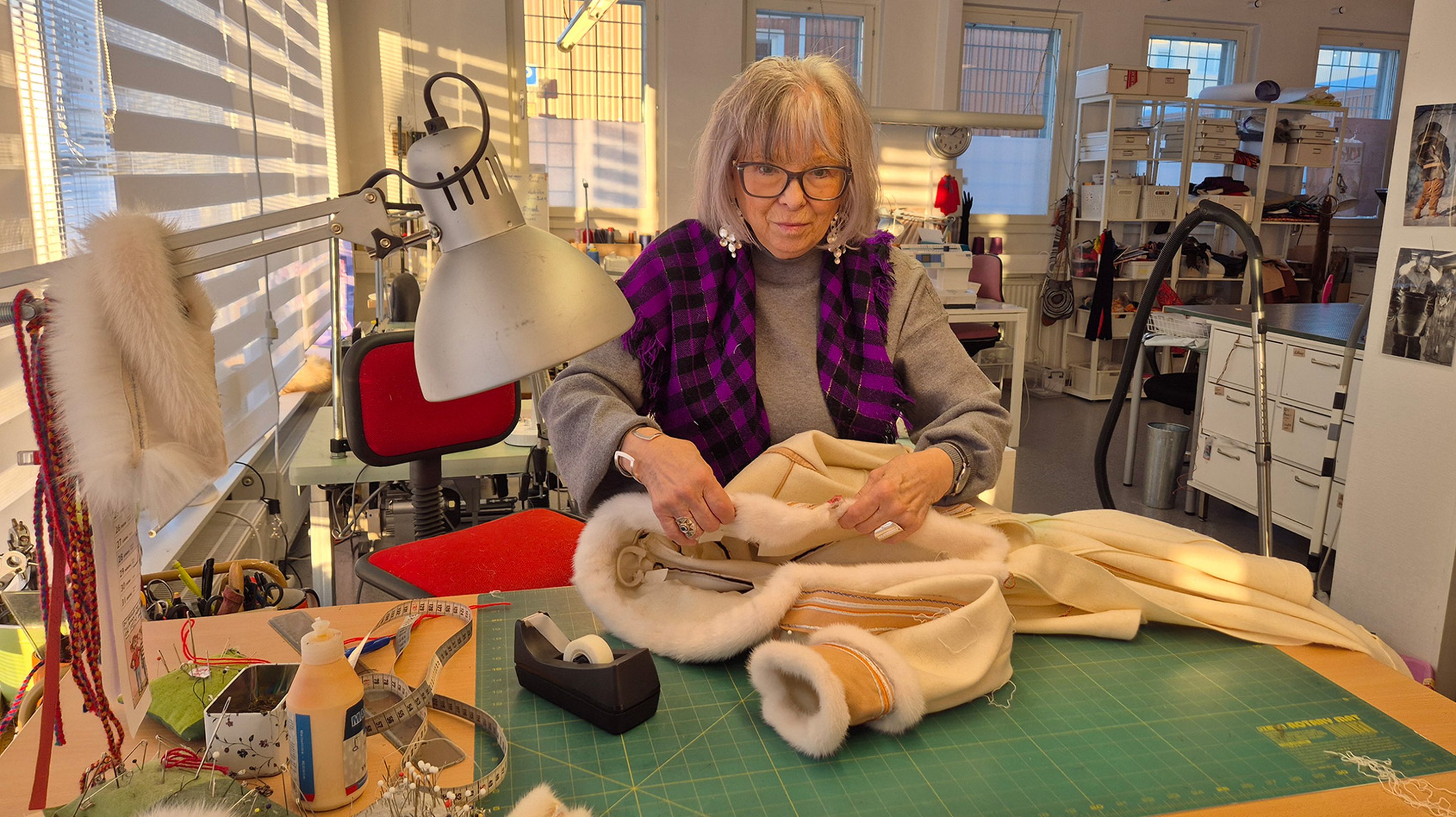
As a child, Karin Vasara sat beside her mother in Lyngsheide, Norway, with needle and thread, the reindeer grazing in the nearby pen. There, in the quiet outdoor work and the Sámi community, her lifelong relationship with the craft was born. Today, over 30 years later, Karin still lives on her childhood joy of creation and a deep respect for the culture she carries with her.
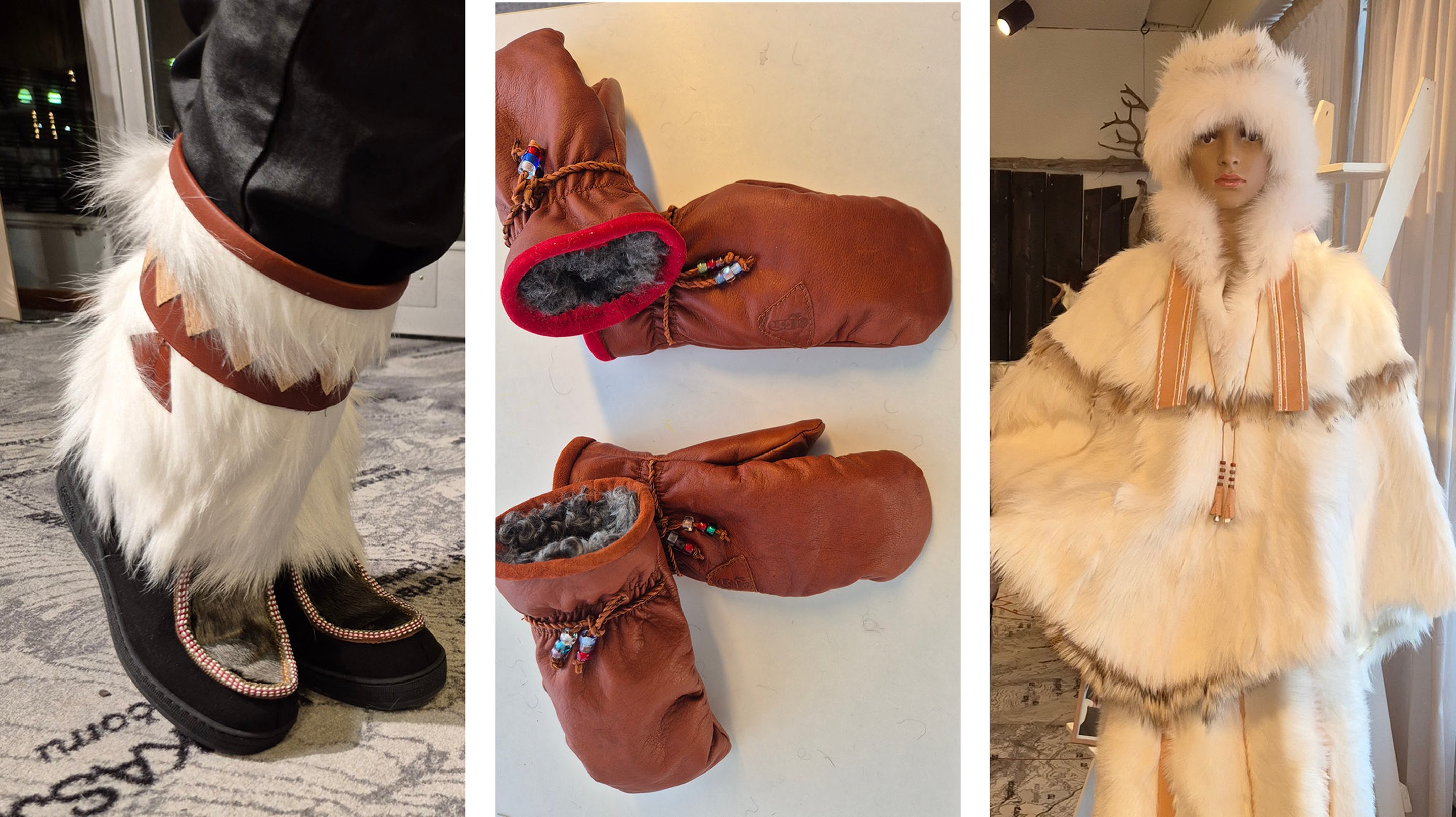
For over three decades, Karin Vasara has carried and made Sápmi visible through her creative work. Since 1989, she has run her business focused on Sámi duodji, Sámi handicraft—not traditional gákti but Sámi-inspired crafts. In her shop and studio, garments and accessories emerge with great care: clothing, shoes, hats, mittens, and smaller details.
Equally important is Karin’s commitment to the future. Since 1990, she has had a strong connection to the Sámi Educational Centre in Jokkmokk, and she has returned to the market every year since. She is passionate about passing on knowledge and sees it as a responsibility for those who received the craft from home. This year, she is working with her niece, who is an apprentice, preparing for a joint exhibition at Sámi Duodji in Jokkmokk (throughout February 2026)—a meeting of generations focused on fur and traditional knowledge. Karin is delighted to see how Sámi youth show pride and determination to learn, especially for those who may lack someone to turn to.
There is no doubt that Karin Vasara’s design means a great deal to Sámi handicraft. She lives her craft with great respect for the heritage she carries and deep gratitude for being able to work with what she has loved since childhood. Through her creation, generosity, and commitment, she continues to keep Sámi duodji alive for today’s visitors and for generations to come.
Karin comes from the village of Karesuando and Sweden’s northernmost Sámi village, and her journey began as a child in Lyngsheide, Norway, at her mother’s side. There they sewed together, often for tourists arriving on large boats, with the reindeer in the nearby pen. Her interest in the craft was awakened early and has followed her through life. After training in garment technology in Stockholm and furrier and fur sewing in Kiruna, she chose to use her professional skills to create Sámi-inspired garments—a way to elevate her heritage.
Her first studio was in Siikavuopio, an island right on the border river to Finland; the business then moved to Karesuando, but she noticed demand was growing and eventually found her place in Kiruna. Today, Karin runs her shop in the old town, where everything in the studio is created by her. She works extensively with commissions, often for international visitors, and each garment is shaped for the individual.
Over the years, Karin has played an important role in broadening the image of Sámi fashion, from early on sewing garments for Sámi politicians—such as blazers with distinct Sámi expressions—to today’s focus on both larger and smaller crafts. She understood early that there are occasions when wearing the traditional gákti is not appropriate, but that there are more ways to carry one’s identity and culture.